Valve tells indies to be less copyable. That's backwards
Asking developers to design around AI clones shifts the burden onto the victims. Steam should police copycats instead of handing out creative advice.
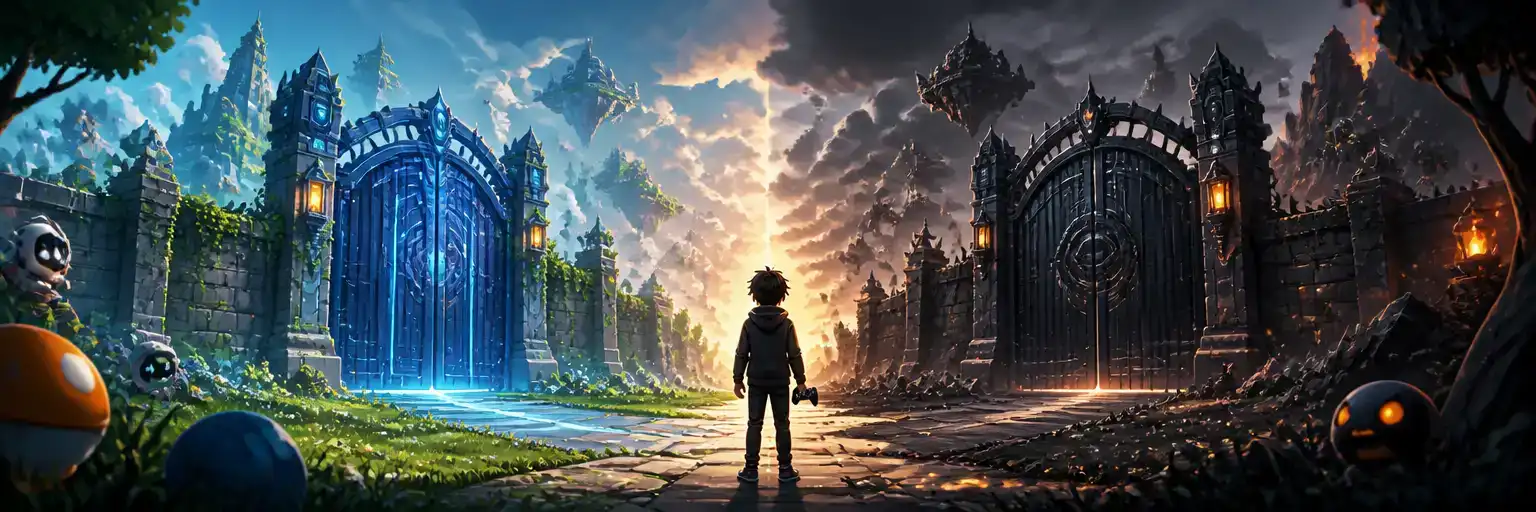
AI-generated image
What do you say to a developer whose game has been cloned so many times that nobody can tell which version is the original? If you're Valve, apparently: "Make it more complex."
That, in short, is the takeaway from a Q&A at the Steam Indie Connect conference in Korea. As Eurogamer reports, citing InvenGlobal, Valve's Tom Giardino and Marc Wilkinson were asked about protection against AI cloning, including a case where developers were reportedly threatened with a clone unless they paid up. Giardino said it was probably a matter for law enforcement, but that Valve would "help in whatever way we can" if cases are reported. His advice for everyone else: build a community, build trust, make the legitimate version the best one, and keep adding "features, personality, and creativity" rather than leaning on "a single mechanic that someone can easily copy." Eurogamer notes that these remarks come second-hand, via machine translation, and that it has asked Valve for clarification.
Good advice is not a policy
To be fair, nothing Giardino said is wrong. Communities do matter, and a deep game is harder to imitate than a one-trick prototype. Valve also says it is "fully aware of the situation" and that a significant number of people are thinking about how to solve it, and GamesRadar reports that Wilkinson conceded that with Next Fest's design "some low-quality games get exposed."
But this is career advice, not platform policy. It is what a mentor says over coffee. It is not what the operator of the dominant PC storefront should say when asked what it will do about copycats on its own store.
Notice the logic. The clone is the problem, and the proposed fix is for the original creator to change. A small studio shipping a tight, focused idea, which is exactly what many great indie games are, is told its game is too easy to copy. In our view, that quietly turns a design virtue into a vulnerability.
You can't build trust with an audience you never reach
Eurogamer asks the obvious question: how do you build a community and prove yours is the best version if you never get the chance to find an audience? We think that's the crux. Needle in a Haystack Simulator, as Eurogamer notes, isn't even out yet and has been copied so many times that its developer joked about adding a mode where you hunt for the original among the copycats. No amount of "personality" fixes a discovery problem created by someone else's flood of clones.
Valve's other line, per Metro, is that Steam puts less emphasis on removing clones and more on boosting the discoverability of the original. That's a reasonable instinct if it works. We'd like to see evidence that it does. Wilkinson's explanation of Next Fest, where the front page starts out fairly random and "personalized" recommendations take over after the first couple of days, doesn't make us more confident that discovery alone will protect originals.
Then there's the legal route. Eurogamer points out that the sheer number of copycats makes it whack-a-mole, that lawyers are probably out of reach for many indies, and that legal action tends to arrive long after the damage. Telling developers the law will handle it is, practically, telling most of them nothing.
"We don't want to be gatekeepers" is a choice, not a principle
Giardino's stance, "We don't want to be gatekeepers telling developers which tools they should or shouldn't use," sounds principled. But policing clones isn't banning a tool. It's enforcing against one game that copies another, which is a different thing entirely. A storefront can be fully neutral about generative AI and still say that a lookalike of someone else's work doesn't belong on its front page. Steam already enforces AI disclosure, so it has accepted that it has a role in setting rules.
Eurogamer also recalls Valve's 2018 position that it would allow everything onto the store except what it deemed illegal or trolling, and its later sweeping move against adult games. In our view, Valve swings between hands-off and heavy-handed. What's missing is the boring middle: a fast, visible takedown path for obvious clones, aimed at the cases where one game is plainly a copy of another.
Valve has the tools, so Valve should use them
Developers should absolutely keep building communities and deepening their games, because that's just good practice. But it can't be Valve's answer. The company runs the store, and it holds the levers: ranking, review, removal. If it won't use them, it shouldn't pretend that the fix is a more elaborate indie game.
Our recommendation to Valve is simple: treat reported clones as a priority queue, publish how fast you act, and keep the "be less copyable" advice for the conference hallway. Until then, indies are being asked to out-design a flood they didn't create.
No topics yet: start the first one.
More stories
Intel's after-hours plunge is a warning flare for PC gamers' wallets
Intel blames a memory crunch and a PC slump for its weak outlook. We think that means pricier, scarcer rigs for gamers for at least the next year, not a quick fix.

Steam's AI labels aren't politics: they're basic respect for players
A former Valve developer's rebuttal to Tim Sweeney exposes what the Steam-vs-Epic feud is really about: whether players get to know how their games are made.
Valve admits Next Fest has an AI problem. Admitting isn't fixing
Valve says "a significant number of people" are working on the AI slop problem at Next Fest, but curation is what Steam sells, and the answer so far is mostly "devs, fend for yourselves."

Sweeney's Steam crusade is really a pitch for Epic's own walled garden
Tim Sweeney says Valve has held gaming back for years. The louder he gets, the more his argument sounds like a sales deck for Epic's ecosystem, not a neutral diagnosis.