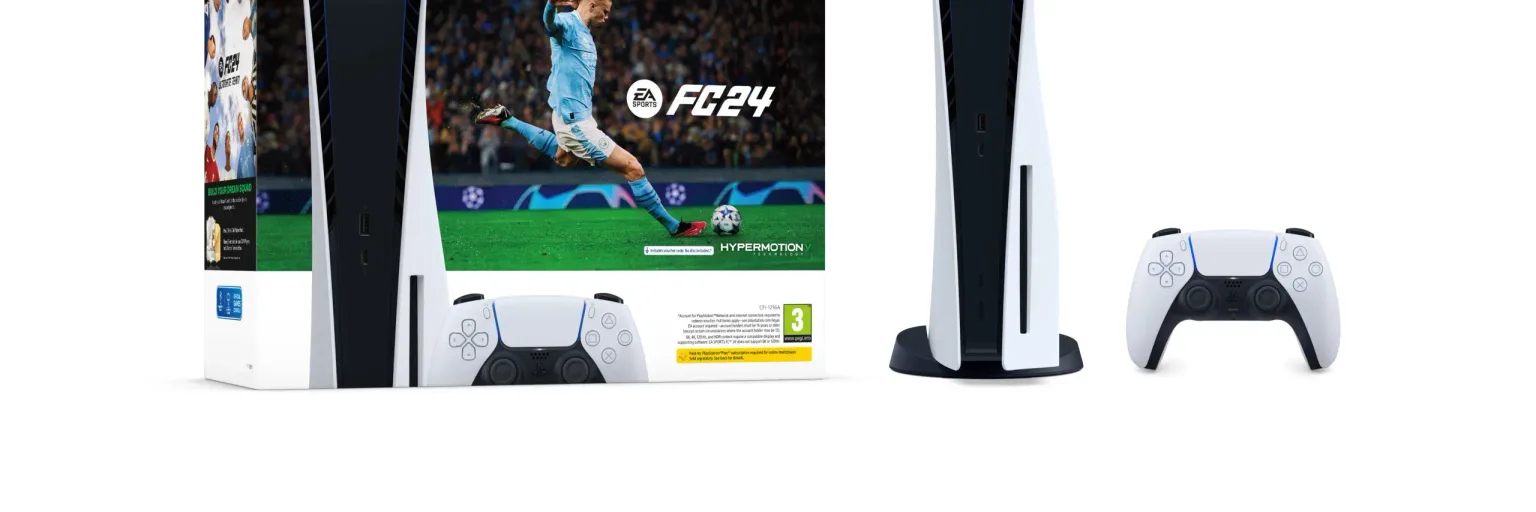
Players should root for the Dutch case against Sony, even if it's messy
A Dutch consumer group wants up to €435 million from Sony over PlayStation Store prices, and its case is a real test of whether closed console storefronts are monopolies.
Photo: PlayStation / sala de prensa (uso editorial)
If the only place on earth to buy a PlayStation game digitally is the PlayStation Store, who exactly is Sony competing with when it sets the price? That question sits at the heart of a Dutch lawsuit, and we think it deserves a real answer from a court.
Here is the short version. The Dutch consumer foundation Stichting Massaschade & Consument (SM&C) is suing Sony on behalf of an estimated 1.7 million Dutch PlayStation owners. According to Stop Killing Games coverage at GamesReviews, it seeks as much as €435 million, which it calls a "Sony Tax." That figure assumes Sony should have taken a 12% commission instead of the 30% the suit alleges. The foundation also claims digital games cost an average of 47% more than physical copies. Sony has not been found liable, and the court hasn't ruled on the substance.
Then Sony announced it would stop producing discs for new games from January 2028. In our view, that turned a niche Dutch dispute into a flashpoint.
The disc was the only price check, and Sony is removing it
Console makers have mostly dodged the antitrust scrutiny that Apple and Google face over their app stores. As Yahoo Tech notes, that was largely because of the secondary game market. We'd argue a used disc, a retail sale or a shelf discount quietly kept the digital store honest.
Take that away and the argument gets uncomfortably simple. SM&C chair Lucia Melcherts put it this way: "No discs means no second-hand market and no alternative to the PlayStation Store, so from 2028, Sony alone decides what a game costs..." Whatever you think of the foundation's math, that sentence describes a market structure, not a feeling. In our view, Sony's disc decision did more for the plaintiffs than any of their own filings.
The €435 million number is shakier than the principle
We'd be careful here. The headline figure depends on a counterfactual: that a competitive market would have produced a 12% commission. That is a modeling assumption, not a fact, and we expect Sony to attack it. Outlets also report the claim in different ways (€400 million, €435 million, $457 million), which tells us the figure works as a framing device as much as a measurement.
The procedural picture is also early. A June 29 hearing dealt with jurisdiction, applicable law and whether the foundation can represent the group at all. Both sides had until October 21 to respond to Dutch Supreme Court decisions before an interim ruling. That's a long way from a payout, so the reader asking "how much will I get?" should hear plainly: possibly nothing, and not soon. SM&C's own site says that if you don't win, you don't pay.
The strength of the case isn't the check. It's the precedent. Even Tech Insider's analysis concedes that a judgment of this size wouldn't be existential for Sony. A ruling that forces changes to store access or pricing would be far more consequential.
Messy is fine: this fight is bigger than one country
The Dutch case isn't alone. There is a UK claim over Sony's 30% cut, which went to trial in London in March 2026, and a separate UK action against Valve over Steam. Mexican lawmakers have also announced a complaint to their antitrust commission. When this many jurisdictions poke at the same structure, it stops looking like a quirk of one legal system.
There are real objections. A collective action can drag on for years, part of any award goes to cover costs, and the likeliest result for an individual player is a small check or none. We'd also admit that opening PlayStation to third-party stores carries risks around security and curation that nobody has fully answered.
But PC players already live with Steam, the Epic Games Store and others, and nobody argues that PC gaming collapsed under the weight of choice. If a closed storefront is defensible, Sony should have to defend it in front of a judge, especially as it moves new games toward digital-only distribution.
Our verdict
Hope it succeeds. Not because €435 million will land in your account, but because someone has to test whether a platform holder can control hardware, store and price with no outside check. If the court sides with Sony, we'll at least know the rules. If it sides with the plaintiffs, we think every console storefront will have to start justifying its cut. Keep an eye on the interim ruling, and don't expect a quick refund.
No topics yet: start the first one.
More stories
Late PS5 horror ports aren't leftovers: they're the smartest play
A PC horror hit lands on PS5 just before Halloween. The date helps, but the real prize is the huge audience that never touched PC in the first place.
GTA 6 hasn't launched yet, and Sony is already the winner of the season
September's US numbers show a nearly six-year-old PS5 gaining ground while Xbox and Switch 2 slide. The pre-launch season belongs to Sony, and rivals should take notice.
Wolverine shows brand beats reviews, but the sales story is far from over
A 77 on Metacritic didn't stop Marvel's Wolverine from selling fast, but a reported budget of up to $300 million means the verdict on this PS5 exclusive is still open.
The PS5 Firmware Scare Shows the Cost of Sony’s Opacity
Sony’s quiet PS5 update may include routine security work, but the speculation exposes how little information owners get when the platform changes its rules.