Mouthwashing’s Console Launch Can Expand Horror Without Taming It
Mouthwashing arrives on October 29 across PlayStation, Xbox, and Nintendo Switch, with Game Pass making its abrasive psychological horror easier to discover than ever.
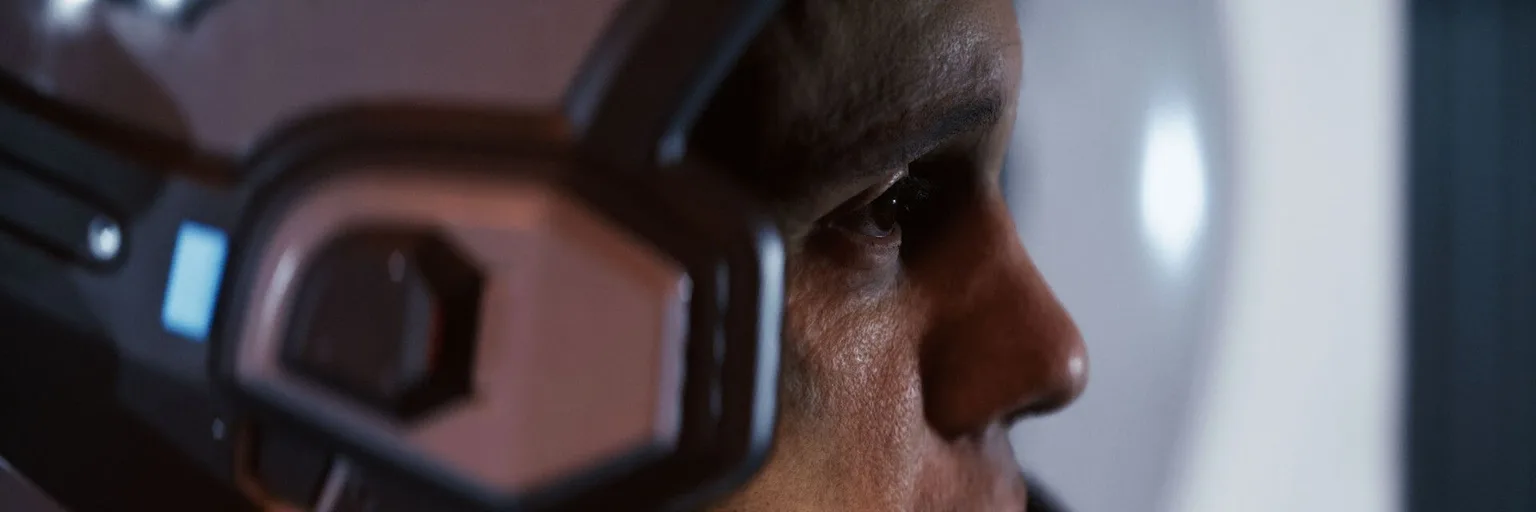
Photo: Xbox / sala de prensa (uso editorial)
What happens when a game built to unsettle a relatively focused PC audience suddenly becomes almost impossible to overlook? On October 29, Mouthwashing will arrive on PS4, PS5, Nintendo Switch, Xbox One, and Xbox Series X|S. It will also join Xbox Game Pass on release day, turning a previously PC-centered horror conversation into a much wider console test.
That expansion matters because Mouthwashing is not being presented as interchangeable content in a crowded release calendar. It is a psychological horror game about a stranded spaceship crew, and its reputation has been tied to how intensely uncomfortable that premise can become. Gematsu reports that the game is coming to PS5, Xbox Series, PS4, and Switch on October 29, while XboxDynasty details the simultaneous Game Pass arrival across Xbox consoles and PC.
The obvious question is not whether more people will be able to play it. They will. The more interesting question is whether greater access strengthens the game’s identity—or turns its carefully controlled discomfort into another easily sampled subscription title.
Accessibility is exactly what this kind of horror needs
Cult horror games often depend on friction. They ask players to seek them out, accept unfamiliar presentation, and tolerate a mood that may be more interested in discomfort than conventional entertainment. That can create a powerful bond with the audience that finds them, but it also creates a hard ceiling. A game cannot become a broader cultural conversation if too many curious players never have a practical way to try it.
Mouthwashing’s console rollout attacks that ceiling from several directions at once. PlayStation players get PS4 and PS5 versions. Xbox players get Xbox One and Xbox Series X|S versions. Nintendo Switch adds a portable audience, while Game Pass removes the need for a separate purchase for eligible subscribers. The official release trailer listing, reported by IGN, makes the breadth of that launch clear.
In our view, that is a particularly good fit for psychological horror. Horror benefits from curiosity: the decision to spend one evening finding out what everyone else is talking about can be enough to create momentum. Game Pass lowers that decision from “Should I buy this?” to “Can I handle this?” That is a much better invitation for a game whose strongest asset appears to be the reaction it provokes.
Game Pass can amplify the conversation—and flatten the first impression
The danger is that accessibility can become noise. Game Pass is excellent at reducing barriers, but a subscription library also places radically different games next to one another. Mouthwashing will not merely be discovered by horror devotees; it will be encountered by players browsing a catalog, looking for something short, strange, or simply different from the biggest releases.
That could help the game enormously. A player who would never search for psychological horror may stumble into it because the title is available on a service they already use. The game’s unusual premise can become a recommendation engine: one uncomfortable playthrough, followed by messages, clips, and warnings that avoid explaining too much. This is how niche horror travels when it works.
But the same structure can encourage disposable sampling. If a player treats Mouthwashing as one more item to start and abandon, its identity risks being reduced to a trailer, a shocking moment, or a vague “disturbing game” label. That would be a loss. Psychological horror is not valuable merely because it is intense; it depends on accumulation, atmosphere, and the player’s willingness to remain inside an unpleasant situation.
The launch therefore needs to preserve mystery rather than overexplain itself. Wider distribution is an advantage only if the marketing gives players a reason to engage with the whole experience instead of chasing isolated reactions.
The Switch version could be the most important test
Nintendo Switch is the clearest experiment in whether Mouthwashing’s identity travels. A portable release changes the physical relationship with horror. The game can be played in shorter sessions, in different environments, and away from the traditional dark-room setup associated with the genre. That might dilute its atmosphere—or make its unease harder to escape.
We think portability is more likely to broaden the game than weaken it. Horror does not always need ideal conditions. Sometimes the contrast between an ordinary setting and disturbing material makes the material feel more intrusive. If Mouthwashing depends primarily on its writing, pacing, and psychological pressure, a portable audience could reveal that those qualities are more durable than its original platform context.
Still, this is where expectations should remain measured. The available documentation confirms the platforms and date, but it does not establish technical parity between versions. We should not assume that every edition will create the same presentation or performance conditions. The meaningful test is not whether every release looks identical; it is whether the game’s central discomfort survives the move.
The winner is the game’s identity, if players let it breathe
The October 29 launch is strategically smart because it combines reach with a clear discovery mechanism. Console availability answers the basic question—yes, Mouthwashing is coming to consoles—and Game Pass gives the answer unusually high visibility. Eurogamer’s October Game Pass listing places it on Cloud, Xbox Series X/S, handheld, and PC for October 29 through Ultimate, Premium, and PC Game Pass.
Our verdict: this is more likely to amplify Mouthwashing than dilute it. The game’s identity is not its exclusivity or its PC-only aura; it is the discomfort it creates. Giving more players a low-friction route into that discomfort is a strength, provided the conversation does not reduce the experience to a handful of shocking descriptors.
Play it on the platform you already have, and approach it as a complete work rather than a curiosity to sample for ten minutes. If Mouthwashing can turn broad access into sustained attention, its console release will prove that cult horror does not need to stay obscure to remain unsettling.
No topics yet: start the first one.
More stories
The Escapists 3 Must Make 3D Mean More Than Bigger Prisons
The Escapists 3 has the right opportunity in 3D, but Team17 must turn extra space into richer schemes instead of a slower version of the same sandbox.

Crimson Desert’s DLC Is Trying to Turn One Open World Into Two
Charting the Unknown goes far beyond extra quests, adding oceans, romance, housing and businesses—but its ambition will matter only if Pywel makes them feel connected.

Directive 8020’s Free Multiplayer Is Supermassive’s Boldest Horror Test
The five-player online mode could turn The Dark Pictures from a cinematic curiosity into a repeatable social horror series—if cooperation preserves the fear.
Lies of P 2 must become more than a darker Wizard of Oz
Neowiz’s early clues point to a sequel preserving precise combat and gothic style while expanding its world, systems and identity beyond familiar comparisons.