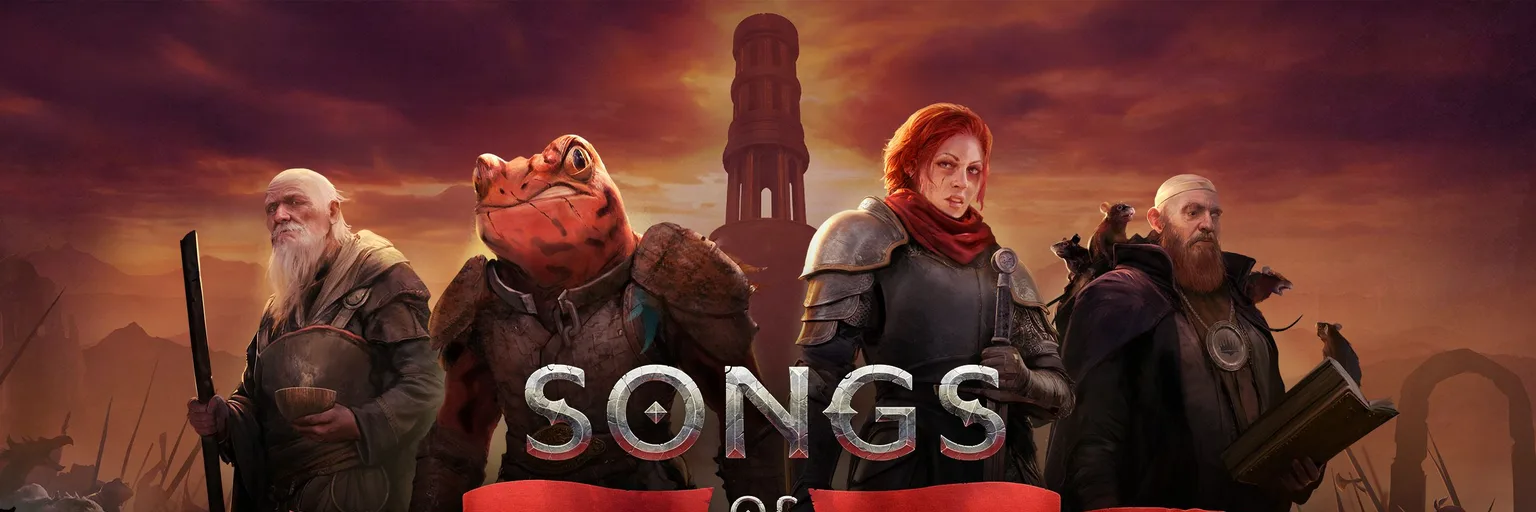
Directive 8020’s Free Multiplayer Is Supermassive’s Boldest Horror Test
The five-player online mode could turn The Dark Pictures from a cinematic curiosity into a repeatable social horror series—if cooperation preserves the fear.
Photo: Supermassive Games / Steam (uso editorial)
What happens when a horror game’s most important decisions stop belonging to one player? In the case of Directive 8020, the answer is now a free online mode for up to five people—and it may be more significant than any ordinary post-launch bonus. Supermassive Games is testing whether its cinematic, choice-driven horror can become a repeatable social ritual rather than a one-and-done interactive movie.
The update is now available, allowing groups to experience the story across separate or shared locations, with each player taking part in the crew’s fate, as Gematsu reports. It fulfills a promise made before launch: Directive 8020 arrived with single-player and offline couch co-op on May 12, while online multiplayer was planned as a free post-launch addition.
The update removes the biggest obstacle to Movie Night
The Dark Pictures’ local Movie Night mode has always made intuitive sense. A group assigns playable characters, passes a controller, and collectively owns the consequences. The problem is not the concept; it is the logistics. Getting several people into the same room with enough time for a full story-driven horror game is a much bigger ask than inviting them to an online session.
That is why the new mode matters. The online version supports up to five players, matching the structure of the local experience rather than replacing it with a separate competitive system. Bloody Disgusting describes the update as letting players board the Cassiopeia from separate or shared locations. The format is deliberately modest, but that is its strength: it makes the existing social fantasy easier to access.
We think this is a smarter use of multiplayer than bolting on an unrelated mode. Directive 8020 does not need to become a traditional action game to justify playing with friends. Its natural multiplayer hook is disagreement. Who should take the risk? Which character deserves saving? Was that choice brave, foolish, or secretly manipulated by somebody who knew more than they admitted?
That kind of conversation is not decoration around the game. It is the game’s most distinctive resource.
Shared decision-making can make horror stronger—or make it noisy
The danger is obvious: horror depends on attention, uncertainty, and pressure. Five people can intensify all three, but they can also dissolve them. A tense silence can become a group argument. A frightening reveal can become a debate about who caused it. The question is not whether multiplayer makes Directive 8020 more social; it is whether the social layer protects the moments that are supposed to feel frightening.
The underlying design gives Supermassive a good chance. The game is built around multiple playable crew members, dangerous dilemmas, and outcomes that can include death. The official structure also supports a sharp contrast between experimentation and commitment. Turning Points lets players revisit major decisions through a branching story tree, while Survival Mode locks in consequences and makes choices final.
That contrast is especially valuable online. One group may want to treat the story as a collaborative puzzle, rewinding a disastrous decision to see another branch. Another may want the uncomfortable version of the experience, where nobody can rescue a favorite character after the fact. A multiplayer horror game needs room for both audiences, because not every group wants the same relationship with failure.
Still, we should not confuse flexibility with tension. If players constantly rewind because the first outcome is inconvenient, the story’s danger becomes a menu option. The best use of Turning Points may be after a first, more committed run—not as an emergency button pressed every time the group dislikes what happened.
The five-player limit gives the format a clear identity
Up to five players is not just a headline number. It mirrors the game’s group-play structure and creates a manageable division of responsibility. Everyone can have a meaningful stake without the experience becoming an anonymous crowd event. That is important for a story in which individual characters, rather than teams or classes, carry the emotional weight.
This is where Directive 8020 can distinguish itself from the broad idea of “co-op horror.” Its appeal is not simply surviving an enemy together. It is watching a friend make a decision that may doom someone else, then living with the argument that follows. The social friction is the content.
The format also gives The Dark Pictures a reason to be revisited. A solitary narrative game often asks players to replay for alternate endings, but motivation can fade once the main path is known. A group changes the equation: different people make different calls, and the same scene can become a new conflict depending on who controls the character. The branching structure and the five-player setup reinforce each other in a way that feels more purposeful than a standard cooperative add-on.
The late arrival is a problem Supermassive cannot ignore
There is one serious limitation: the online mode arrived months after launch. That timing matters because social games depend on coordination. The people who wanted to play together may already have finished, moved on, or never started because the promised feature was not available.
A free update removes the financial barrier, but it does not automatically restore attention. Supermassive now has to convince players that Directive 8020 is worth returning to as a group, not merely remind them that the feature exists. That is a marketing challenge as much as a design one.
The update also cannot erase the game’s divided reception. One review praised its pacing and choice structure, while another criticized slow stealth sections and an uneventful rhythm. Multiplayer can amplify a strong foundation, but it cannot guarantee one. If the underlying moments are compelling, friends will turn them into stories. If the stretches between those moments drag, friends may simply make the waiting more noticeable.
That is why our verdict is cautiously positive. The free online mode is not a bonus to file beside the main game; it is a strategic test of what The Dark Pictures wants to be. Supermassive should lean into the series as social horror, keep consequences meaningful, and treat Turning Points as a tool for exploring stories rather than deleting mistakes.
For players who enjoy arguing over fictional lives, Directive 8020 is now a much more interesting recommendation than it was at launch. For Supermassive, the real challenge begins here: proving that five friends can make the Cassiopeia feel more frightening—not merely more crowded.
No topics yet: start the first one.
More stories
Lies of P 2 must become more than a darker Wizard of Oz
Neowiz’s early clues point to a sequel preserving precise combat and gothic style while expanding its world, systems and identity beyond familiar comparisons.
Fight Night’s comeback will live or die by more than nostalgia
EA’s return to boxing is a rare chance to challenge annualized sports games—but only if depth, trust and fair monetization matter as much as the brand.

Haunted Chocolatier could push cozy games beyond comfort
Eric Barone’s next game is not Stardew Valley 2: its action-RPG direction could prove that cozy games can grow without losing their welcoming spirit.

Fall Guys needs more than a technical overhaul to matter again
Epic says a “huge retooling” is underway for Fall Guys, but a technical reset alone will not restore a game whose biggest problem is lost momentum.