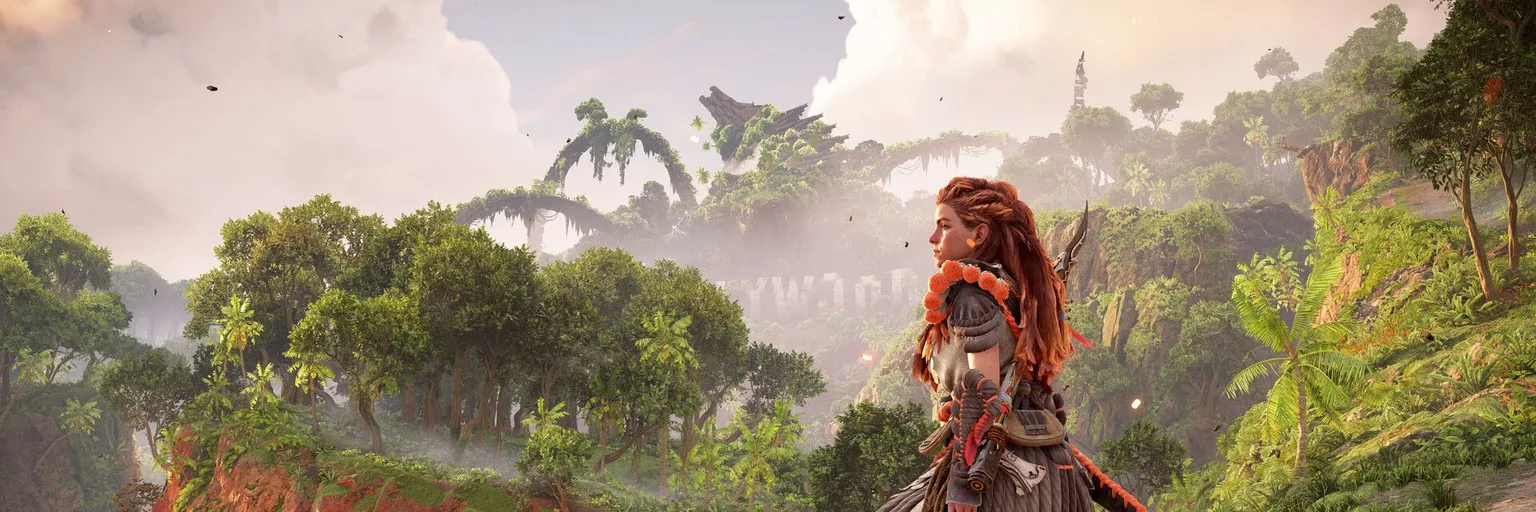
Saros’s Zenith Update Proves Exclusives Need a Second Act
Saros’s free Zenith update turns New Game Plus, Boss Rush, accessibility, and challenge modifiers into a stronger longevity strategy than launch-day hype alone.
Photo: PlayStation / sala de prensa (uso editorial)
What keeps a single-player exclusive alive after the launch spotlight fades? Saros’s answer is not another trailer or a vague promise of future support. It is a substantial, free update that gives players concrete reasons to return, replay, and reshape the challenge.
Housemarque released the Saros: Zenith update on October 19, 2026, at no additional cost for everyone who owns the PS5 game. The update adds New Game Plus, a boss-rush mode called Overlord Rush, new challenge and protection modifiers, accessibility options, trophies, and more. PlayStation’s official announcement frames the release around two goals: improving replayability for experienced players and making Saros easier to approach for newcomers.
That is a more meaningful strategy than simply adding content for content’s sake. Zenith recognizes that longevity has two audiences: the players who have already mastered the game and the players who found its demands intimidating. In our view, that makes Saros’s post-launch plan smarter than relying on the fading energy of a launch window.
New Game Plus is valuable because it changes the conversation
A conventional New Game Plus mode can be little more than a victory lap: carry over progress, increase the numbers, and repeat the same route. Saros’s version, called Eclipse Layers, appears designed to be more deliberate. After completing the game, players unlock new nodes in the Passage’s armor matrix, leading to intensified versions of the game with altered rules.
The important detail is choice. Players select Carcosan modifiers before entering an Eclipse Layer, and they need to reach a required balance rank using challenge modifiers. There are 25 different challenges to choose from, according to the official announcement, which means replaying is not just about enduring a harder preset. It is about constructing a ruleset.
That distinction matters. The best replay systems turn difficulty into a form of authorship: players decide which complications fit their skill, their preferred rhythm, or their appetite for risk. A regeneration challenge, for example, makes certain larger enemies recover quickly and requires a melee hit to finish them. That is not merely “more health.” It asks players to rethink positioning and timing.
This is where Saros can build a longer tail. Instead of treating the first completion as the end of the product, Zenith makes it the point at which the game starts exposing its deeper combinations. We think that is the right model for a demanding action game, provided the modifiers produce genuinely different decisions rather than just harsher punishment.
Boss Rush gives mastery somewhere to go
Overlord Rush is the clearest expression of Zenith’s veteran-facing ambition. A boss-rush mode strips away the broader journey and focuses attention on the encounters that define a combat system. That is useful for players who want a concentrated test, but it also creates a clearer measure of improvement than another full campaign run.
The mode’s value is not simply that it is faster. Boss Rush can become a laboratory for the mechanics that Saros wants players to understand: movement, reactions, weapon timing, and close-range decisions. When a game is built around an intense “bullet ballet,” compressing its major confrontations can reveal whether the combat is satisfying on its own terms.
This also gives the community a more durable shared target. A full playthrough is difficult to compare because players may take different routes and build around different systems. A focused rush mode creates a common arena for mastery, experimentation, and personal benchmarks. That does not guarantee a competitive scene, but it gives the game a stronger reason to remain in the conversation.
Accessibility is not a concession; it protects the game’s identity
The most encouraging part of Zenith is that its accessibility options do not appear to flatten Saros’s combat. The update adds auto-fire, motion-aim support, button remapping, and a slow-game-speed option. The slowdown can be adjusted and used automatically during combat or activated manually. Enemy attacks remain the same; players simply gain more time to respond.
That is an unusually good design compromise. Difficulty remains present, but the game offers more ways to process its demands. Auto-fire removes the need to hold a button while aiming at a hostile, yet it does not automate perfect reloads. The player still has to perform that timing correctly. Likewise, the slowdown preserves the incoming attacks rather than deleting them.
The update also adds 10 new protection modifiers and 10 new challenge modifiers. One protection modifier turns accumulated corruption into extra melee damage, while the regeneration challenge pushes players toward a quick finishing strike. These systems suggest that accessibility and high-level difficulty can share the same framework: one side reduces friction, while the other creates more demanding combinations.
That is important for exclusives because a smaller audience cannot be taken for granted. A game that only serves the players who succeed immediately may create a passionate core, but it leaves potential players outside the door. Zenith widens the entrance without abandoning the identity that made Saros distinctive.
The real lesson is commitment, not just free content
The update is reportedly 3.5 GB on PS5, but its significance is not the download size. The stronger signal is that Housemarque has connected replayability, mastery, accessibility, and personalization in one release. VGC reports that the free update includes both New Game Plus and Boss Rush, while TheSixthAxis describes Overlord Rush as a major part of the release.
That does not prove every exclusive needs a Boss Rush mode or 20 new modifiers. The lesson is narrower and more useful: post-launch support works best when it responds to how people actually engage with a game. Veterans need fresh mastery targets. Newcomers need flexibility. Everyone benefits when the update adds meaningful decisions instead of disposable rewards.
Our verdict is clear: Saros’s Zenith update is a stronger longevity strategy than launch hype alone. For owners, it is an obvious reason to return. For players who bounced off the game’s intensity, the accessibility options make a second look worthwhile. And for the broader PlayStation lineup, Saros offers a persuasive blueprint: an exclusive should not just arrive loudly. It should have somewhere compelling to go.
No topics yet: start the first one.
More stories
BeamNG.drive on PS5: A Console Revolution for Realistic Physics
The long-awaited arrival of BeamNG.drive on PlayStation 5 is poised to redefine vehicular physics simulation on consoles, challenging traditional game design with its deep customization and open-ended sandbox experience.
Ace Combat 8's Rapid Price Drop Exposes AAA Pricing Crisis
The immediate discounting of a major title like Ace Combat 8: Wings of Theve challenges traditional launch pricing, signaling a growing problem for new games' perceived value.

MGS Master Collection Vol.2: Konami's calculated gamble on its legacy
The arrival of Metal Gear Solid: Master Collection Vol.2 is more than just a nostalgia trip; it's a critical step in Konami's strategic push to revitalize its iconic franchises, paving the way for a new era for the beloved stealth action series.

PlayStation Plus Flexes Its Muscles Against Gaming's Heavyweights
With a strong October 2026 lineup featuring two AAA titles and beloved classics, PlayStation Plus Extra and Premium demonstrates a strategic effort to maintain subscriber engagement amidst a crowded release schedule and the impending launch of Grand Theft Auto VI.