Fight Night’s comeback will live or die by more than nostalgia
EA’s return to boxing is a rare chance to challenge annualized sports games—but only if depth, trust and fair monetization matter as much as the brand.
Photo: Electronic Arts / Steam (uso editorial)
What if the most important sports game comeback of the year is not really about boxing? EA Sports is bringing back Fight Night after 15 years away, according to Yahoo Sports, but the larger test is whether a focused, skill-driven sports game can still earn attention in a market dominated by annualized giants.
The announcement arrives with almost nothing attached to it. Recent coverage says EA has confirmed the franchise’s return, while no release date or gameplay details have been announced by Suaragarut. That restraint makes the comeback more interesting, not less: the name is powerful enough to generate instant conversation, but the finished game will have to justify why Fight Night deserves another round.
Fight Night is valuable because it is not another annual sports treadmill
The appeal of Fight Night has always been easier to understand than the business case. Boxing is a concentrated sport: one fighter, one opponent, a limited space, and a combat system that can turn timing, distance and stamina into the entire game. That focus is precisely what could make the revival stand apart from the routine of yearly sports releases.
We think that distinction matters more now than a simple nostalgia hit. A boxing game does not need to compete by offering the biggest roster, the most modes or the loudest live-service calendar. It needs to make every exchange feel meaningful. A missed punch should create an opening. Footwork should matter. Patience should beat button mashing. If EA can build around those principles, Fight Night could offer something the broader sports market increasingly struggles to provide: a game whose core pleasure comes from mastery rather than constant content churn.
But the brand alone cannot supply that depth. A 15-year absence creates goodwill, yet it also turns every remembered strength into a demand. Fans are not merely asking for familiar presentation and recognizable names. They are likely to expect a modern simulation with enough mechanical detail to reward learning over time. That is an opinion, not a confirmed feature list—but it is the standard EA has created by reviving the series at all.
The long wait raises the bar instead of lowering it
The comeback is especially notable because recent reporting painted a much less certain picture. In September, ixbt.games reported that an earlier reboot concept had been canceled and that any future Fight Night would need to be created from scratch. That report conflicts with today’s revival news, but the contrast is revealing: EA appears to have moved from years of uncertainty to a public commitment without yet explaining what form the project will take.
That history should make players skeptical in a productive way. The question is not whether EA can make a technically polished boxing game. The question is whether it can sustain a game built around a narrower audience without sanding away the sport’s complexity to chase the broadest possible market.
A new Fight Night could be a counterexample to the idea that every major sports release must behave like a permanent platform. It could also become another product designed around recurring spending, padded progression and a parade of monetized upgrades. The documentation provides no announced monetization model, so predictions about the business model remain predictions. Still, the risk is obvious enough to define the stakes: if EA turns a skill-based boxing revival into a store with punches attached, the nostalgia will curdle quickly.
Boxing’s unpredictability makes the game’s identity more important
Boxing is not a straightforward license to commercial success. Its momentum can shift with the fighters, events and storylines that capture public attention, and the available reporting offers no guarantee that the sport’s wider popularity will remain constant through development. That uncertainty makes a strong game identity more important, not less.
Fight Night should therefore avoid trying to imitate the annualized logic of the biggest sports franchises. It does not need to promise that boxing is always the center of the entertainment universe. It needs to be good when interest spikes and compelling when the spotlight moves elsewhere. A deep career mode, strong local or competitive play, and a combat system that rewards expertise would give it a durable foundation. Those are recommendations, not announced features, but they point toward the kind of value a comeback needs to create.
The danger is that EA sees the revival primarily as an intellectual-property opportunity. The opportunity is more ambitious: use a familiar name to make a smaller, more deliberate sports game feel culturally important again. That requires accepting that not every player needs to be converted into a daily spender. A committed audience that trusts the game’s rules and progression may be more valuable than a huge audience that feels constantly pressured.
The real winner will be the player who can wait
With no release date and no gameplay details currently announced, there is no reason to pre-order, speculate about platforms or treat the revival as a finished product. The smart position is cautious optimism. The announcement matters because it reopens a space that has been empty for 15 years, but the project has not yet demonstrated that it understands why players wanted Fight Night back.
EA has a chance to make this more than a museum piece. It can deliver a focused alternative to the annual sports machine, one built on timing, tactics and trust. Or it can use a beloved name to reproduce the same frustrations players already associate with modern sports monetization.
Our verdict: Fight Night’s return is promising precisely because it is unproven. Watch for evidence of mechanical depth, a meaningful single-player structure and a fair approach to progression before treating the comeback as a victory. The nostalgia gets EA back into the ring. Only the game itself can win the bout.
No topics yet: start the first one.
More stories
Haunted Chocolatier could push cozy games beyond comfort
Eric Barone’s next game is not Stardew Valley 2: its action-RPG direction could prove that cozy games can grow without losing their welcoming spirit.

Fall Guys needs more than a technical overhaul to matter again
Epic says a “huge retooling” is underway for Fall Guys, but a technical reset alone will not restore a game whose biggest problem is lost momentum.
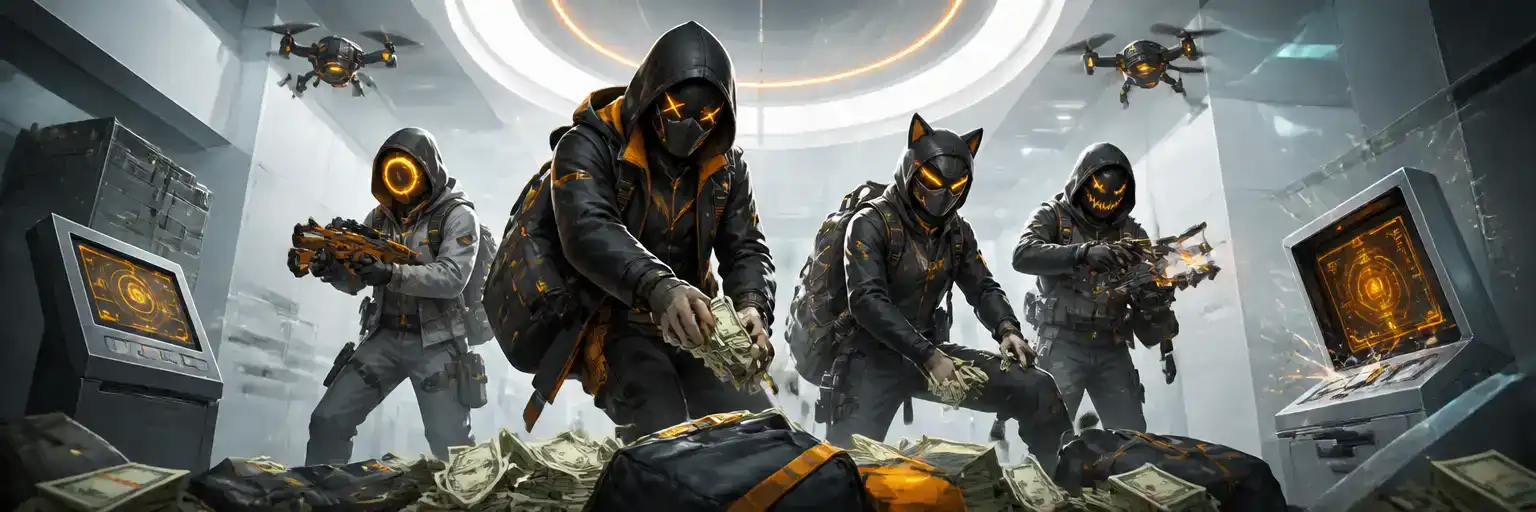
Can PAYDAY: Aces High VR Truly Revitalize the Franchise?
The long-running heist franchise makes a bold move into virtual reality with a dedicated new entry, but can it truly revive its fortunes or will it remain a niche experience for VR enthusiasts?
A semana dos games mostra um mercado mais fragmentado do que nunca
Os lançamentos de 'We Were Here Tomorrow', 'Nintendo Switch Sports Resort' e 'One Piece: Grand Gourmet' desta semana demonstram uma indústria que prospera na diversidade, com nichos florescendo ao lado dos blockbusters.