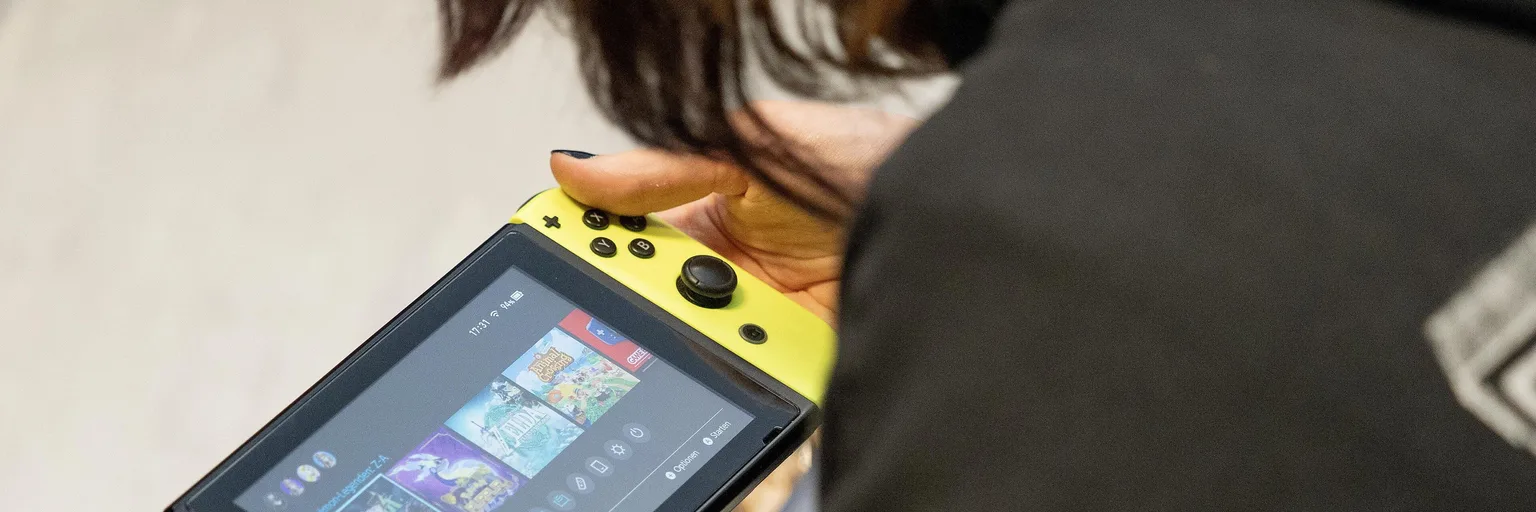
Switch 2's lock just failed, and Nintendo's next move is what matters
Switch 2 exclusives are booting on PC and iPhone barely a year after launch. Nintendo's hardware lock no longer protects its games, so the question is how hard it hits paying players.
Photo: Evan-Amos / Wikimedia Commons (Public domain)
For years, the pitch of a Nintendo console was simple: the games live on our hardware, and our hardware is a locked box. That pitch just took a hit. Switch 2 exclusives are now booting on machines Nintendo doesn't make, and they got there in days rather than years.
Here is what the documentation supports. Tecnoblog reports that open-source projects now let Switch 2 titles run on other platforms, though they require an original copy of the games. TechPowerUp says that less than a week after the first jailbreak went public, developer Will Faust posted footage of Mario Kart World running on an iPhone 18 Pro. He used a private fork of a project called nxnative. Canaltech adds that Faust dumped a copy of the game he bought himself.
The lock was never the moat, the exclusivity was
The headline reads as a story about piracy, and it is. But the more interesting reading is strategic. Nintendo's model has long leaned on a closed ecosystem: its own hardware, its own storefront, its own rules. The jailbreak, which Tecnoblog says arrived a bit more than a year after launch, punches a hole in the first of those pillars. Once code can run without Nintendo's blessing, the games can be pulled out of the box.
We think the speed is the real signal. From a public jailbreak to a flagship racing game on a phone in under a week suggests the hard part was the entry point. The rest of the work followed quickly, and open-source tinkerers apparently had the tooling ready. A lock that holds for a year and then collapses in days is not much of a lock.
One caveat, because the coverage is not uniform. Adrenaline notes that the console can't yet be considered fully unlocked, and that some of its exclusives are only starting to receive unofficial adaptations. So this is an early crack, not a total collapse. Early cracks have a habit of widening, though.
"You need to own the game" is a weaker shield than it sounds
The detail defenders of these projects will lean on is that they require an original copy. That is real, and it matters: Faust's demonstration, as reported, started from a game he had bought. It also separates this from the crude "download everything for free" scenario.
But we wouldn't over-credit it. A requirement to dump your own cartridge or download is a speed bump, not a moral firewall. The same tooling that lets a paying customer play on their own phone can, in principle, serve someone who never paid. The documentation doesn't tell us how hard that second path is, so we won't pretend to know. What we can say is that "bring your own copy" is a statement about the current projects' design, not a guarantee about how people will use them.
This is the uncomfortable part for Nintendo. The legitimate-use story, in which owners play what they bought on hardware they prefer, is sympathetic. The piracy story is just as plausible. Both run on the same code.
The real test is whether Nintendo punishes owners or attackers
Nintendo's next move will define how this plays out, and we'd argue there are two very different ways to make it. One is to patch the entry point and move on. That is the narrow response. It targets the exploit, not the user. The other is the blunt response: aggressive bans, heavier restrictions on online features, and legal pressure that sweeps up hobbyists along with pirates. A guide from TechTudo already frames the story around the risks and the possibility of bans, and that is a reasonable sign of where players' worries are.
The documentation doesn't say what Nintendo has done or plans to do, so everything here is prediction. Our prediction is that the company will lean on the tools it knows. Another outlet, Dicas PC, flags Nintendo's legal history as part of the picture. If Nintendo reaches for the hammer, the people who bear the cost will be the ones who simply bought a console and a few games and want them to keep working.
There is also a tension we think Nintendo can't wish away. It has just spent the week selling a Zelda-themed console and teeing up a remake of a 1998 classic, per reports on the launch. It doesn't want to be the company that shows its most loyal customers a ban screen. Heavy-handedness has a brand cost that a piracy rate can't offset.
Our verdict
Treat this as a turning point, not a catastrophe. The lock was always going to be tested, and now it has been. What matters from here is proportion. If Nintendo fixes the hole and keeps legitimate owners out of the blast radius, this becomes a footnote with a good technical story. If it answers with collective punishment, it will turn a hacker curiosity into a trust problem.
For players, the advice is boring but sound: don't run unofficial code on a console you use online, and don't assume that "I own the game" shields you from a ban. For Nintendo, the smart play is to defend the games without making paying customers feel like suspects. We'll be watching which of the two Nintendos shows up.
No topics yet: start the first one.
More stories
Aonuma's nerves prove remaking Ocarina is a no-win job
Even the man who helped build the original admits he can't stop worrying, and Nintendo's remake must honor memory while still earning its place on Switch 2.
The Duskbloods delay is the right call, even if it hurts
Pushing FromSoftware's Switch 2 PvPvE to 2027 is a sign of a studio taking balance seriously, but it leaves Nintendo's year-end lineup with a visible hole.
Pokémon Unite's shutdown proves even Pokémon can't save a mid-tier live service
Pokémon Unite closes March 23, 2027. The biggest IP on Earth couldn't keep a free-to-play MOBA alive, and that should change how you spend money on games you can't keep.
Palworld on Switch 2 is Pocketpair's smartest provocation yet
Pocketpair's CEO says he'd love to bring Palworld to Switch 2 while Nintendo sues his studio, and it reads less like a plan than a message: the lawsuit hasn't made the game untouchable.