Deadlock's Silent Ascent: Valve's Unconventional Beta Strategy Pays Off Big
Valve's Deadlock is defying conventional wisdom, shattering pre-launch player records with an invite-only beta and proving that a gradual, strategic rollout can build unprecedented hype and engagement.
Photo: Valve / Steam (uso editorial)
Can a game achieve blockbuster pre-launch success while remaining an exclusive, invite-only experience? Valve's Deadlock answers with a resounding yes, as its MOBA-shooter hybrid continues to defy expectations, racking up player numbers that most fully launched titles can only dream of. Far from the typical beta frenzy, Deadlock's methodical rollout points to a highly successful, yet unconventional, strategy that is poised to disrupt the crowded hero shooter landscape.
Still officially in an invite-only limited access phase, Deadlock has recently achieved a staggering milestone, hitting 262,145 concurrent players on October 9, 2026. This impressive figure isn't a flash in the pan; it follows a consistent upward trajectory, with previous peaks of 228,086 concurrent users on September 29, 2026, and an earlier record of 171,490 in September 2024. This latest record even eclipsed Team Fortress 2's historical peak of 253,997 concurrent players, a remarkable feat for a game that hasn't even had a commercial launch.
The Art of the Controlled Reveal
Valve's approach to Deadlock's pre-launch phase is a masterclass in controlled scarcity. Instead of a wide-open beta that risks overwhelming servers or exposing an unfinished product too broadly, Deadlock has relied on exclusive invitations, often distributed by existing players, to gradually expand its player base. This creates an aura of exclusivity and a powerful word-of-mouth effect, turning every new invite into a coveted commodity. The strategy fosters a dedicated core community that feels invested in the game's development, rather than merely consuming a product. By limiting access, Valve can carefully manage feedback, iterate on game mechanics, and ensure a more polished experience for each new wave of players, ultimately building anticipation without the common pitfalls of an open, bug-ridden beta.
"City Never Sleeps": Fueling the Fire
This sustained growth is heavily attributed to a continuous stream of substantial updates and new content, proving that Valve knows how to maintain momentum even behind a velvet rope. The major "City Never Sleeps" update, launched on September 29, 2026, was a pivotal moment. This wasn't just a cosmetic refresh; it brought significant redesigns to large areas of the city map, introduced new neutral enemies, created new districts, and presented the mysterious character The Broker. Crucially, it began the staggered release of six new heroes. Characters like Rat King (released October 2), Baba (October 6), and Solomon (October 9) were introduced sequentially, with the community even voting on the order of their availability.
Solomon, for instance, a character themed around chess, immediately resonated with players, using bishops, knights, rooks, and queens as the basis for his offensive, defensive, and area-control abilities. The strategic rollout of these heroes, coinciding with the record-breaking player counts, suggests a deliberate and effective content strategy that keeps the community engaged and ensures new reasons for players to log in and invite friends.
Beyond Numbers: A Defined Identity Emerges
More than just raw player numbers, these updates are clearly refining Deadlock's identity as a MOBA-hero shooter hybrid. The "City Never Sleeps" package also renewed HUD elements, brought quality-of-life improvements, and added new accessibility options. These changes have transformed both the presentation and the readability of matches, giving the game a much more defined aesthetic and gameplay feel. Valve's commitment to iterative development, evident in the planned changes to abilities, mechanics, map, and even complete character redesigns, indicates a long-term vision.
What we are witnessing is a strategic masterclass from Valve: building a strong, engaged community from the ground up, proving that the most direct path to success isn't always the widest. Deadlock's journey, from an unannounced title surpassing 10,000 players to a closed beta that challenges Steam's giants, suggests it is well on its way to becoming a significant player in the competitive gaming landscape, all before its official debut.
No topics yet: start the first one.
More stories
NVIDIA's RTX Spark: The promise of mobile PC gaming, with crucial caveats
NVIDIA’s RTX Spark platform, with its ARM-based architecture and Blackwell GPU, brings groundbreaking AI capabilities to Windows laptops, but its gaming proposition, though advanced with DLSS 5 and anti-cheat, faces significant hurdles that keep it from being a clear win for all players.

Epic's Linux Gambit: A Vibe-Coded Challenge to Steam's Dominance?
Epic Games' new AI-assisted launcher and the promise of Fortnite on Linux signal a bold, if risky, strategy to carve out a niche in the open-source gaming landscape and disrupt Valve's long-held stronghold.
Ashes of the Singularity II: Can this RTS sequel reclaim a lost throne?
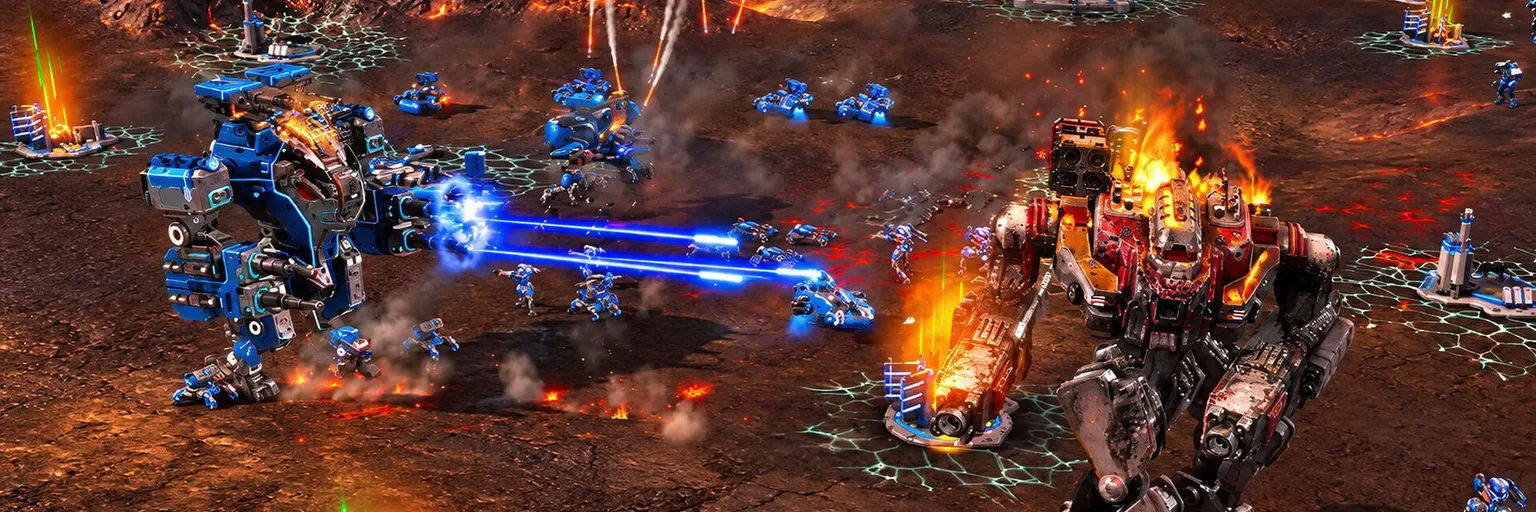
Stardock's upcoming real-time strategy epic, Ashes of the Singularity II, arrives on November 10, 2026, with an ambitious vision for large-scale warfare, aiming to revitalize a genre navigating a crowded market and evolving player expectations.
TCL CSOT's 700Hz OLED Ambition: A Vision of the Future or Overkill?
TCL CSOT's rumored push for 700Hz OLED gaming monitors by 2028 challenges current performance needs, prompting us to question whether such extreme refresh rates offer true value or merely escalate the hardware race.